Tag: poetry

  • The Clachanpluck Poems

    The Clachanpluck Poems

    I still seem to be stuck in poetry mode at the moment, although these little verses came about in a slightly different fashion.  It’s all Facebook’s fault.

    Well, actually, that’s not quite true, it’s all a guy called Phil McMenemy’s fault.

    No, that’s not entirely true either, let me explain…

    Phil McMenemy is a photographer.  And not just any old photographer, but a very good photographer (if you ask me – and I’m a photographer too, so I should know at least a little about what I’m talking about).  If you want to judge for yourself, you can track him down on Facebook (if that’s your preference) or you can check out his website at www.pmcphotography.co.uk

    Anyway, Phil has a gallery in the lovely little village of Laurieston in Dumfries and Galloway (a little to the north and west of Castle Douglas).  It’s simply called The Gallery at Laurieston, it also has its own page on Facebook and it’s a wonderful place to visit to see Phil’s beautiful photos as well as artwork by other local artists and creative types.  Phil also makes a fine cup of tea and often has a stash of cake to bring to the table as well.  All in all, a very very good place indeed.

    OK, so what’s that got to do with poems?

    Well, just the other day, Phil posted an interesting little piece on Facebook about how the village of Laurieston was once known as Clachanpluck.  This led to a long stream of comments from many different folk and the occasional bit of silly rhyming and limerick-writing along the way.  In my case, it fired up the old lyrical muscles and – with only a hint of encouragement from Phil – led to an outbreak of utter silliness in verse form.

    Hence, I can now bring you…The Clachanpluck Poems!

    It all started very simply, with the realisation that Clachanpluck worked rather well in the old “pheasant plucker” comedy rhyme:

    I’m not a Clachanplucker
    I’m a Clachanplucker’s mate
    And I’m only plucking Clachans
    ‘Cos the Clachanplucker’s late.

    (Someone else spotted this as well and commented on it at almost the same instant that I did.)

    Next, it was time for a limerick:

    There was a man from Clachanpluck
    Who mistook his wife for a duck
    She called the police
    Whom he thought were all geese
    As they carried him off in their truck.

    Things just got sillier from that point onwards when Phil suggested something based on the famous (infamous?) opening line from Casabianca (“The boy stood on the burning deck…”).

    First, I give you the more sensible, polite version:

    The boy stood on the burning deck
    He was from Clachanpluck
    He once performed in Shakespeare
    As Hamlet, then as Puck.

    But then the sea-life called him
    Upon the waves he flew.
    He sailed the seven seas around
    On all the oceans blue.

    Until he yearned for Clachanpluck
    And made his way back hame
    To find it’s now called Laurieston
    Some bugger changed the name!

    So let this be a warning
    To all who wander far
    Don’t be too long returning
    Or you won’t know where you are.

    And, last, but by no means least (and certainly the longest), we have the very silly version.  Which is not rude or crude at all, honest.  If you see anything even slightly naughty in here, it’s obviously all in your own mind…

    The boy stood on the burning deck
    He came from Clachanpluck
    A spark flew up his trouser leg
    And made him cry “Oh dear!”

    The captain was a ladies’ man
    His body hard as rock
    With muscles finely sculpted
    And a most enormous hat.

    The bosun was an older man
    Who sailed through storms and squalls
    While chewing on tobacco
    And scratching on his knees.

    And still the flames grew higher
    The mast began to split
    The bosun fell onto his knees
    The captain cried “Oh bother!”

    The captain’s daughter came on deck
    As fine as crystal glass
    The longest legs, the slimmest waist
    And such a lovely nose.

    And so the ship began to sink
    The crew were all in fits
    Distracted only briefly
    By the captain’s daughter’s smile.

    They climbed aboard the lifeboats
    And trusted to their luck
    And a boy with smokey trousers
    Wished he’d stayed in Clachanpluck.

    See?  I told you.  Not rude or crude at all…
  • The Hills

    The Hills

    When you’re on a roll, you’re on a roll.  Yet another poem.  This one isn’t dark, it isn’t angsty and it isn’t an airy-fairy exercise in writing some particular form or other, it’s just a poem.  I suppose it might be in ballad form.  Or possibly something else altogether – my technical knowledge of poesy isn’t all that extensive so don’t take my word for any of it.

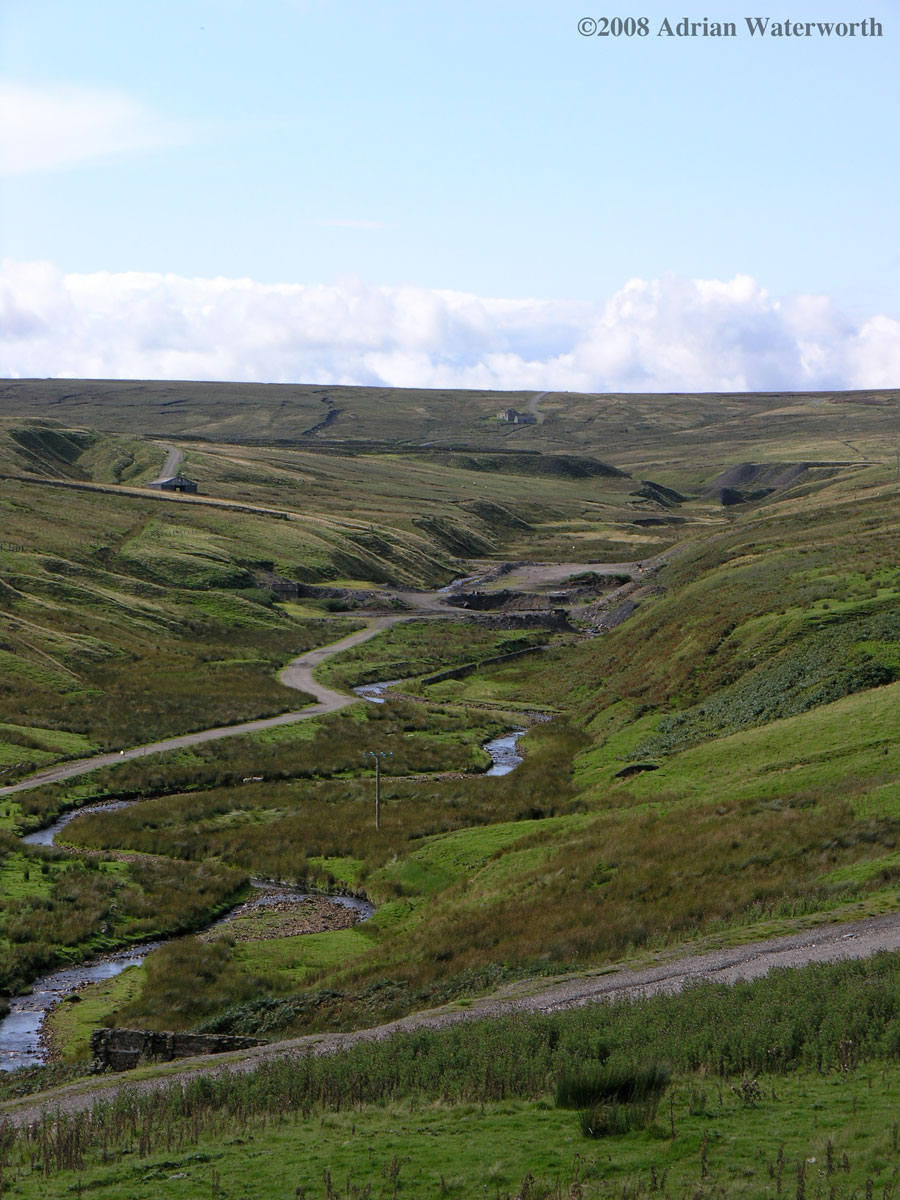
    Anyway, this particular bit of verse actually has its roots quite close to my heart.  Since my teenage years, I have spent chunks of my spare time walking on the hills and moors; originally in Weardale, Teesdale and Tynedale, also in the Lake District and, more recently, in the hills and uplands of Dumfries and Galloway.  I love these wide open spaces and wildernesses, their beauty, their solitude (OK, not so much of that in the Lake District sometimes, I grant you) and the feeling of being close to nature and in touch with the elements that you get when you’re walking there.

    Over the years, I have seen some of the changes in the way those hills and moors are used and managed.  I saw the extensive closures and the losses of long-established hefted flocks during the foot and mouth outbreak back in 2001 and the months (or years) that it took to re-introduce sheep to some areas and start to build those flocks back up again.  Along the way, I’ve also seen the multiplication of individual wind turbines and extensive wind farm installations on the hills – something that seems to be particularly common here in Dumfries and Galloway.  Now, on the one hand, I’m a big fan of renewable energy and protecting the environment and I don’t think that we’re doing enough on those fronts.  However, I’m not convinced (at all) that onshore wind is the solution – at least, not to the extent that it seems to have been favoured politically and economically in recent years.  I’m no expert in the field, but it appears to me that a lot of money has been spent (and continues to be spent) in developing and subsidising onshore wind power but the most noticeable result is that the companies who are designing and installing these wind farms (and the owners of the land on which they are built) are making good money out of it while the rest of us are picking up the bill (both through charges built into our electricity bills and through taxation).  Moreover, our hills and moors and upland open spaces are becoming increasingly dotted with wind turbines, fenced off by wind turbine developers and losing a significant part of their original natural beauty and their overall amenity both to us and to future generations.  It also seems to me that the economic focus on onshore wind (and also, to an extent, on offshore wind) has turned other renewable energy technologies into the poor relations so that insufficient money is being directed towards research into tidal, solar and other renewables that might prove to be much better, more reliable and more stable long-term options in the future.

    Yes well, enough of the eco-politics, back to the poetry.  You might call this a bit of a protest poem if you like.  It contains years of memories from the hills of Weardale and Teesdale, mixed with what I see happening today in Scotland and it’s called The Hills.

    The Hills

    I walked these hills as a young ‘un.
    On shale and stone and peat.
    Through bracken, fern and heather.
    On tired and aching feet.

    I saw the grouse skip skyward.
    I saw the hare’s wild run.
    I saw the buzzard floating
    Beneath a sinking sun.

    In times long gone they worked here,
    They dug for coal and lead,
    For iron, tin and limestone
    In mines now cold and dead.

    Where rain pours on the ruins
    And sheep lurk by old walls
    And ghosts of long-lost miners
    Are heard in curlews’ calls.

    But sheep don’t make much money
    In all this open space.
    There’s cash in building turbines
    And we know just the place.

    First one or two, a couple, a few,
    A dozen, here and there.
    On every moor and hilltop
    The towers pierce the air.

    No viewpoint left unsullied
    No landscape left in peace
    But pay-outs for the owners
    Or the holders of the lease.

    They say it’s for the environment
    It costs us on our bills
    But if nature’s so important
    Why do we ruin these hills?

    I walked these hills as a young’un
    I know what we have lost
    There’s men make profits from turbines
    While the rest of us live with the cost.

  • If I had known…

    If I had known…

    More poetry today – and this one is deliberately a little bit of an arty-farty exercise.  It’s also another slightly dark one.  Well, maybe not dark, but a bit angsty and the kind of thing that a simpering 18th or 19th century poet-wannabe might have come up with during his teenage years when he was desperate for a glimpse of a female ankle and thought that writing this sort of tripe would be certain to attract the interest of some coquettish girl with beautiful hair, come-hither eyes and a fondness for diaphanous nighties.

    But seriously folks…this one is a sonnet.  We’re all roughly familiar with the sonnet form (even if we don’t realise it), particularly the Shakespearean version (“Shall I compare thee to a summer’s day?” and all that), but there are other sonnet forms too.  They all have the official fourteen lines, but they differ in the rhyme schemes that they use.  In this case, I decided that I wanted to try writing a Petrarchan sonnet.  Petrarch was the man who was really responsible for putting the sonnet form on the map in Europe.  He blazed the trail that Shakespeare, Spenser, Milton and all the rest would follow as the centuries rolled by.  The true Petrarchan sonnet has a rhyme scheme of ABBA ABBA in the first eight lines, followed by CDE CDE or CD CD CD or some other variation of two (or three) rhymes in the last six.  As it turns out, I still ended up breaking the rules since – if we’re being strict about it – I’ve got something that is more like ABBA ACCA DEE DED.  However,  in the famous words of Captain Barbossa in a well-known film franchise, they’re “more what you’d call guidelines than actual rules”.

    Anyway, without further ado, I give you this little piece called “If I had known…”

    If I had known…

    If I had known the things I know today
    When walking home from school; a quiet child
    Shaped by contentment, love and life so mild,
    Perhaps I might have lived another way.
    But years ran onto years, each passing day
    Confirmed me in the blessings of my life.
    No hardship there to bear, no deadly strife
    To break the peace or steal those joys away.
    Yet age creeps on and dragging in its train
    The countless cares that life can hold in store
    The loss and grief and fear of so much more
    That clouds the soul and fills the heart with pain
    And robs the mind of pleasures gone before
    As life is washed in tears like winter rain

  • At the End

    At the End

    When not trying to dream up characters or plots or similar fictional devices (and when not being silly on Facebook or elsewhere) I sometimes try my hand at a bit of poetry.  Although it is often maligned for being “up its own bottom” or “arty-farty” (particularly when it comes to modern blank-verse forms) and there can be a fair bit of unwelcome snobbery associated with poets and poetry, there is something very pleasing and human about writing a poem or short verse.  We all do it at some point, even if it’s only a bit of doggerel or a daft limerick and there can be a real feeling of satisfaction just playing with the rhyme and rhythm of language to construct something in poem form.  Not that I can claim to be any great shakes in the verse or lyric department, but it’s fun and there’s nothing wrong with a bit of practice now and again.

    Anyway, a while ago, I was sitting at my desk just writing and doodling away – nothing special, just scribbling in a journal – when I had a sudden, unexpected visit from one of the muses of poetry (I’m not sure which one) and had to write the following down.  It’s a little dark in its theme, but that probably reflects where my head was at the time (although I’ll leave that particular discussion for another day).  It’s called “At the End”.

    At the End.

    No secrets. No lies.
    Everyone dies.
    Maybe aware. Maybe surprised.
    A life’s living done.
    A race duly run.
    A year, a week, a day in the sun.
    And what will you see
    That night when you’re there?
    Will you look back in anger?
    Or shame? Or despair?
    Mistakes you have made.
    Foundations you’ve laid.
    A life full of joy
    Or mainly afraid?
    A light burning bright
    Or hidden from sight?
    Will things you have done
    Still be there when you’re gone?
    Or will there be just
    A small handful of dust
    To throw in the air and say
    “Yes. I was there.”