Tag: hospital

  • The Lingering Legacy of St. Bagnes the Bilious

    The Lingering Legacy of St. Bagnes the Bilious

    Once again it has been an inordinate length of time since I last posted anything here – in fact, it’ll be getting on for two years in another month or so.

    Those who follow my (very!) occasional ramblings will recall that the last time I added anything to this oft-neglected chronicle, I had just spent three months “enjoying” the experience of having about 15cm of plastic tubing (see below) stuck in my abdomen. This new bit of internal plumbing was then connected to a bag that I had to carry around with me in order to drain the poisonous contents of a severely infected gallbladder that was, at one point, threatening to send me off to the Pearly Gates/Pits of Hell (delete as applicable).

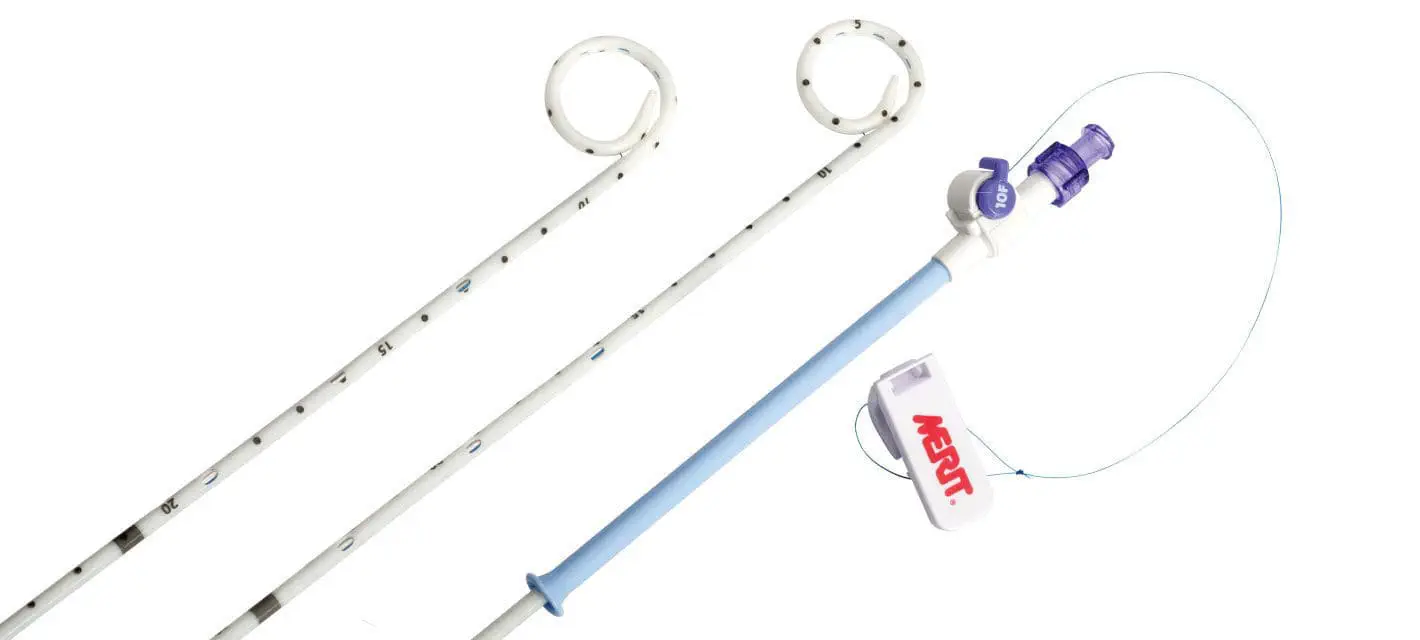
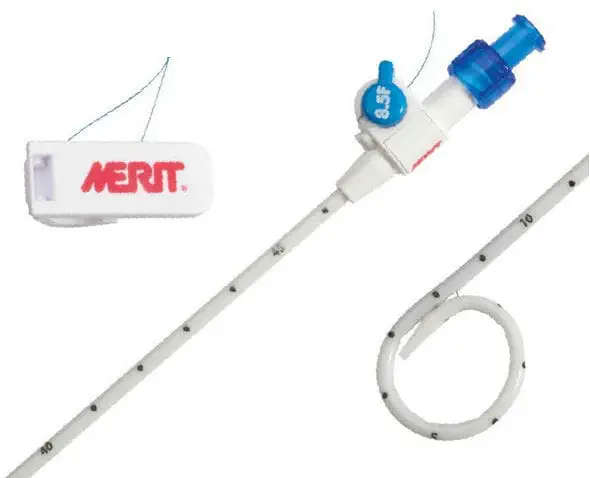
    Merit biliary drainage catheter

    Obviously, that didn’t happen (phew!) but it was an unpleasant time nevertheless. At the beginning of October 2022, when the surgeons made the decision to remove the gallbladder drain, I was about five or six weeks out from having my gallbladder removed (surgery was scheduled for mid November 2022). According to the surgical team, my various scans and other tests suggested that I should be fine without the drain for that length of time so it was just a case of going home, recovering from having the extra pipework and then returning to hospital to get the troublesome little organ evicted once and for all.

    Oh well. As it turned out, these were what are usually known as “famous last words”. I lasted about two and a half weeks before my temperature started climbing, the nasty abdominal pains started up and I once again found myself beginning to shake, shiver and lose touch with reality a bit. So it’s off we go to A&E in Stranraer and, while I waited to be triaged and checked out, Glenda popped back home to pack me a bag. We knew full well that I’d be off to the Costa del Dumfries and Galloway Royal Infirmary once again. As soon as the doctor saw me, he agreed and they confined me to a nice quiet room with various needles, medications and drips stuck in my arms, to await transfer.
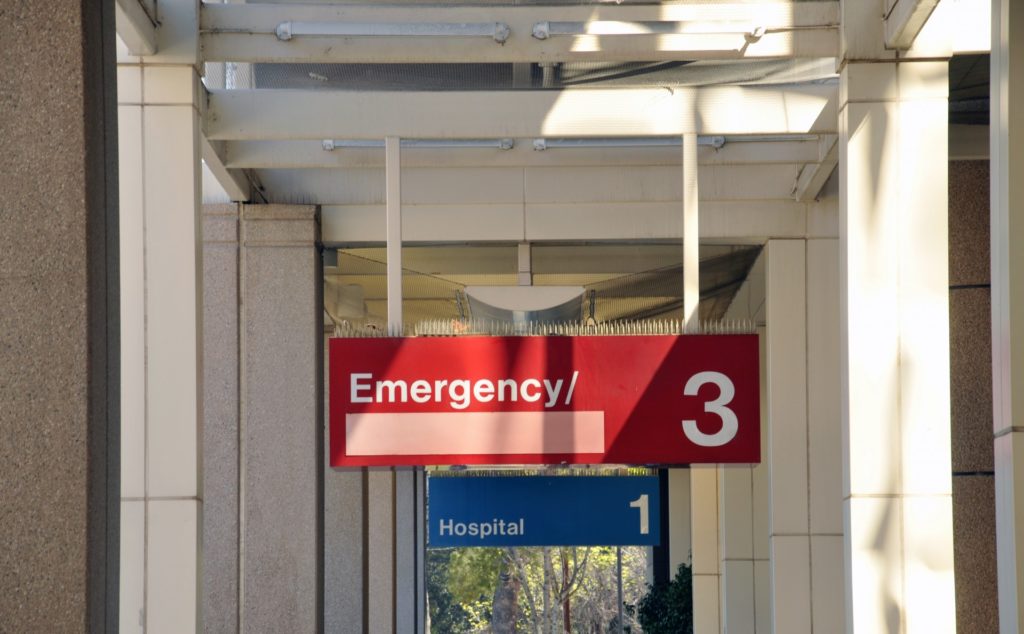
    Hospital entrance and signs

    I reached DGRI on a dark Friday evening and, after waiting around for a while to be checked in by the A&E staff, I was whisked off to the surgical ward once again. The next day, after some tests and a bit of prodding and poking, the surgeon came in to tell me that, this time, it was too risky NOT to operate so I’d be scheduled for emergency surgery on the Sunday. The only thing that would stop it happening would be if some major disaster befell and all the operating theatres were full of other people being put back together.

    That particular scenario didn’t come to pass, so I duly found myself wheeled away to the big shiny room on the Sunday afternoon. Glenda, meanwhile, was stuck waiting for me and gnawing her fingernails down to the elbows, having been party to the surgeon and anaesthetist giving me the usual run-down of all the ways that it might go terribly wrong and getting me to sign the relevant “I know what I’m letting myself in for” paperwork.

    After the first few minutes in theatre, admiring all the hi-tech machinery and the glowing lights and big screens and what have you, one of the nice masked people told me to take a whiff of this, injected something into my arms and my brain proceeded to wander off and play with the fairies for a few hours. By the time I recovered, I was en route back to my hospital room (still rather groggy and largely out of it), but with a few new holes scattered around my abdomen and one gallbladder missing, presumed chucked in a medical waste bucket somewhere. Yay!

    Of course, in typical fashion, I had chosen the worst possible time for all this. The following day (Monday) was Glenda’s dad’s funeral and we were supposed to be there and I was supposed to be doing one of the readings. Obviously this couldn’t happen, but knowing that I had come through the surgery and – while not exactly feeling tip-top – was at least alive and likely to recover, Glenda travelled down to Kendal with some of the other members of the family and attended the service. The wonderful nurses on the surgical ward even made sure that I was given some privacy in my room so that I could watch a live-stream of the proceedings on my iPad that afternoon.

    Now, normally following gallbladder removal, you’ll be sent home very quickly – sometimes the same day, otherwise the day after the operation. However, in my case, it had all been a bit, well, icky and horrible in there with infections and other assorted nasty things, so I’d had to be mauled about more than usual and ended up with a slightly non-standard removal. The practical upshot was that various of my internal parts shut down in protest (something called Post-operative Paralytic Ileus for the medically inclined) and I proceeded to be rather unwell for the rest of the week. This included the delights of a naso-gastric tube for a few days and not really knowing when (or even if) the onboard systems of the USS Adrian were likely to reboot themselves and start working again. And, having been away at a family gathering with a couple of hundred people, poor Glenda was unable to take the risk of coming in to see me in case she brought cold, flu, COVID or other assorted bugs with her.

    That was, if you’ll excuse the expression, a really, really shite week for us both.

    However, by the Friday, things were looking up, the NG tube was removed and on the Saturday I was deemed fit enough for discharge. Woohoo! One 80-odd mile taxi journey later and I was back home, where Glenda had done stalwart work cleaning the house, tidying up and preparing for the doddering old invalid to take to his bed and continue his recovery. And so it came to pass. The first few weeks weren’t that much fun and largely consisted of resting and consuming regular doses of morphine to stop me going “Ouch! Lawks! Yarroooo!” whenever I tried to move too much. But time passed, I got better and started going for short – very, very slow! – walks. I then took longer walks and, after maybe six months, things were looking up.

    Which was when it all seemed to go a bit runny again and I found myself not actually ill, but lacking in energy and failing to recover my previous strength and stamina. And that is still how I find myself today. While I’m theoretically recovered from the surgery and all the gallbladder-related nastiness, I’m still not quite my old self. This is bloody annoying to say the least and I’ll admit that it has taken a bit of a toll on my mental health over the last year or so. I’m still trying to find my way through it really.

    But – and it’s an important but – I’m still here. I might even have the time to write a bit more. (Yeah, yeah, we’ve all heard that before…)
  • The Unexpected Exorcism of St Bagnes the Bilious: Part 3

    The Unexpected Exorcism of St Bagnes the Bilious: Part 3

    Warning: This is the third and final part of a long story. If you want to start at the beginning, you can find Part 1 here. The whole saga also contains some medical stuff that the squeamish might find a bit…icky?

    A scan…and a bit of a shock!

    When you’re not allowed to eat or drink but find yourself sitting in a hospital restaurant for an hour or so, it can be a bit of a chore. However, needs must and it was still more comfortable than hanging around in a remote corner of a busy surgical ward.

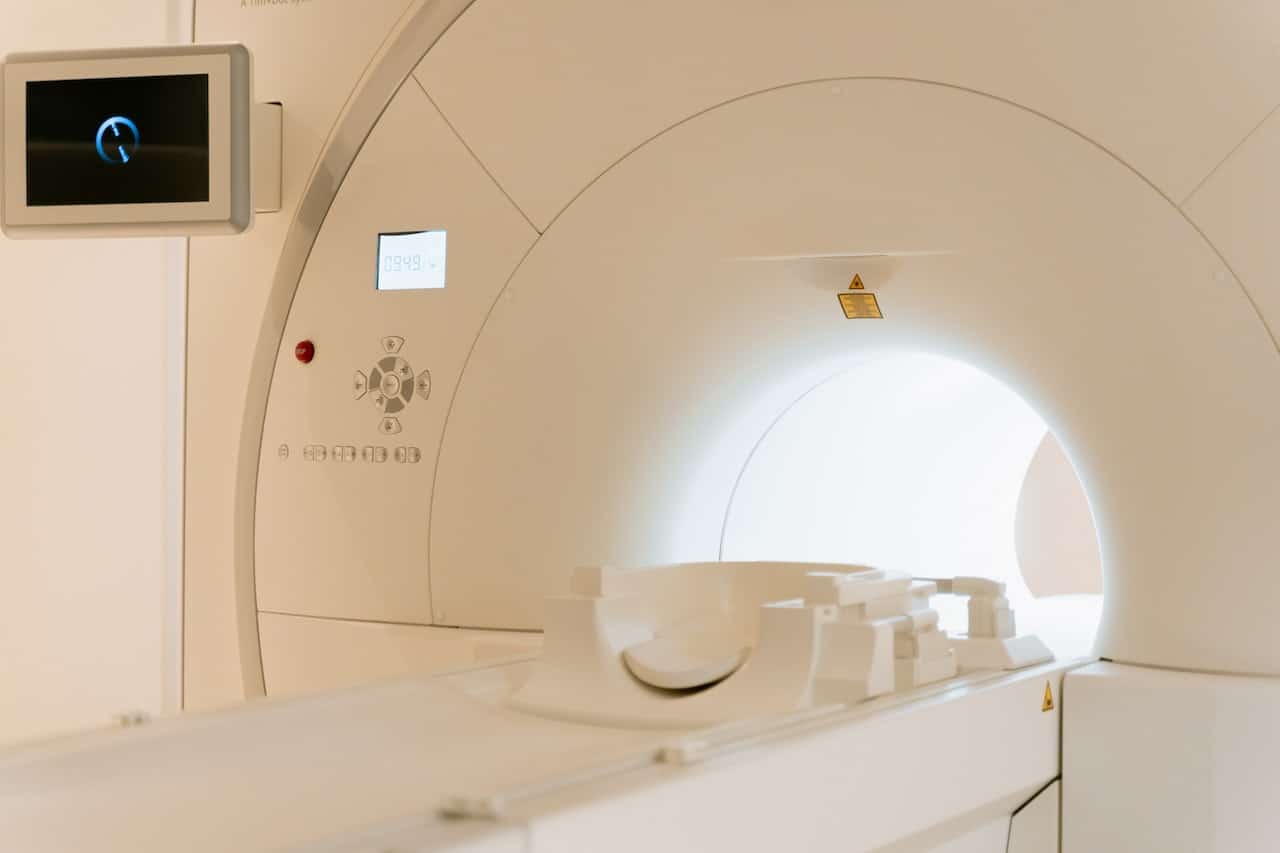
    Soon enough the time came to head over to the medical imaging department to get myself thoroughly magnetised in an MRI machine. I was actually scheduled for what they call an MRCP scan. That’s Magnetic Resonance Cholangiopancreatography to give it its Sunday name. Basically, it just means a type of MRI scan that looks at the gallbladder, bile ducts, pancreas and other assorted wibbly bits that live in that part of your abdomen.

    It takes around a quarter of an hour or so, during which time you lie in the machine listening to the dunga-dunga-dunga-wheeeeee-bzzzzzzzz-dunga-dunga noises from the machine itself while a nice voice in some headphones tells you to take a deep breath in, let it out, hold your breath or breathe normally depending on what the radiologist is trying to see. Some people find MRI machines quite claustrophobic and a bit scary but I’m very lucky and actually find it all a bit restful. Although I did almost get a fit of the giggles when listening to that voice very politely and calmly say “Please resume breathing”. I couldn’t help but think that it must be the only time in a hospital that that particular phrase is used so politely and without the least hint of panic or desperate hope.

    Once the scan was over with and I was allowed to put my trousers back on (metal zips etc. don’t get on with MRI scanners) we headed back upstairs to the Surgical Assessment Unit (SAU) to await the results.

    And we waited…

    Then we waited some more…

    I’d actually come out of the scanner at around 3:15. Around 4:15 we checked with the doctors and nurses, only to be told that the MRCP report still hadn’t come up from the MRI department and one of the surgeons would need to check it out before they could decide what to do next. So, with the nurses saying that they’d give us a call once things were happening again, we went back to the restaurant for a cuppa and to wait even more.

    Tea time and a bit of a surprise

    By 5:15, we were still sitting waiting and the phone hadn’t uttered so much as a beep. Much of the day had been pretty tedious. All the walking around and the initial wait in A&E had been a bit frustrating. Now it all began to get a bit frustrating again. With the prospect of a couple of hours driving to get back home, possibly in the dark and with continuing bad weather, I took a walk back up to the SAU to ask what might be happening. Where I was told that the MRCP report had now come through and the surgeon would be looking at it but he was currently busy resuscitating someone. That’s fair enough – whoever they were, their needs were obviously a lot greater than mine at that point and I hope they were OK.

    The nurse did, however, then tell me a couple of other interesting things. First of all, that all of my blood tests had come back and were normal so the doctors were happy about that. Second, that the surgeon and various other doctors, including one of the surgical registrars on duty and my consultant, had been discussing my case and were thinking that they would just take the drain out altogether. It was clear from the MRI images that only the tip of the drain remained in place in the gallbladder and the surgeon just wanted to double check the report before making the call. If we could just wait a little longer, hopefully things will get sorted.

    Remove…the…drain…

    No…more…St Bagnes the Bilious…

    Feeling more than a bit stunned and with this completely unexpected idea rattling around in my head, I made my way back down to the restaurant to tell Glenda. We decided to use the additional time to get something to eat and waited a little longer. The phone finally rang sometime around 6:30 I think. The surgeon had reviewed the MRCP report and the decision was made – the drain was coming out. I had to report back to the SAU and head for room 12.

    Breathe in and hold your breath…

    Clsoe-up of a Merit biliary drainage catheter

    Remember this guy? That curly little piggy-tail was the bit that was still inside my gallbladder. Well, more or less anyway.

    When they fit one of these, they do it under a local anaesthetic and use ultrasound to guide the procedure. They then stab you with a bloody big needle and use that to put the tube in place. Owing to the infection and inflammation I was suffering while in hospital back in June, I had been a difficult case and it took the doctor four or five attempts to fit the damned thing. And it was screaming agony the whole time he did it. But at least it did its job and helped to save my skin once it was in place.

    Now, it was coming out. We headed on up to the SAU and settled into the room. We hadn’t been there long before a nurse arrived and confirmed that the surgeons had given the go-ahead to remove the drain and, if I was OK with that, she could do it now. Once she’d done it, she’d need to put a dressing over the hole and we’d have to wait a while just to make sure that I was alright but I could then go home.

    I’ll admit, I was bit nervous. I’d had a different type of scan back in August that showed that my gallbladder was still blocked up. At the time, the various doctors had decided that it would be safest to leave the drain in place until such time as I could have the surgery to remove the gallbladder altogether. Otherwise there was a risk that I could have another attack of the same problem that had put me in hospital in the first place.

    I mentioned all this to the nurse and she was lovely. She said that she was just reporting back to me what the surgeon had told her but if I wanted to wait to have it all confirmed that was fine. Although the surgeon was currently busy in A&E so I’d have to wait until he could come up to see me.

    Under the circumstances and with the clock ticking around towards 6:45, I decided that it was fine and she could go ahead and remove St Bagnes from my person.

    How do they remove one of these things? Simple. They take off the dressing, get a little scalpel to cut the stitch that holds the tube in place and remove all the stitches. Then they tell you to take a deep breath and hold it, while they press a dressing pad over the hole where the tube comes out of your body. As soon as you’ve done that, they take hold of the end of tube and just haul it out. All the way. With no anaesthetic.

    What you do at this point is scream, while most of the muscles in your body tense right up and make you kick your legs about a bit. With the tube out, the nurse keeps firm (and I mean FIRM) pressure on the wound while your body adjusts to the new state of affairs and stops leaking. It continues to hurt all the time she’s doing that – maybe five minutes or a bit more – but once she’s happy that the hole is behaving itself and she releases the pressure, it all rapidly calms down. A nice soft dressing is applied and you settle down to wait for a while. Within another ten or fifteen minutes, the trauma is more or less over and you already feel more comfortable than you did when the drain was in place.

    While we were waiting to be given the all-clear to head home, the nurse brought me my hospital discharge letter and the surgeon arrived from A&E. He was very nice and answered all my questions. He explained that they had looked at the MRCP report and were happy that the drain could be removed without too much risk. Obviously, there’s never no risk at all so if I found myself feeling unwell again I should head straight for A&E. In the meantime though, the MRCP images had shown them a clearer picture of the situation and they had all agreed that the drain wouldn’t need to remain. Particularly since it had already been in so long and was starting to become problematic and an increasing risk in its own right. The fact that I would be likely to be having my surgery soon (within the next month or two) also helped.

    So, a mere five or ten minutes later, I checked with the various doctors and nurses at the desk and they were happy for me to head home. We were back on the road by 8:00 p.m. and finally got home around 9:30 p.m. The final scores for the day were:

    • Miles driven: 160
    • Miles walked around hospital: probably between 1 and 2
    • Time out of house: thirteen and a half hours
    • Time in hospital: just under ten hours
    • Drains attached when entering building: one
    • Drains attached when leaving the building: zero
    • Emotional rollercoasters ridden: one monumentally bloody big one.

    Today, I’m not feeling too bad. There’s obviously still a dressing over the wound and it will need to be changed fairly regularly over the next few days. The one that the nurse put on on Tuesday night was rapidly soaked as the wound continued to leak a bit so I popped in to see the district nurses the following day and they re-dressed it again. I’m seeing them again on Monday for another check up but things are already improving and the wound has already stopped leaking.

    All in all, it’s been quite an adventure.

  • The Unexpected Exorcism of St Bagnes the Bilious: Part 2

    The Unexpected Exorcism of St Bagnes the Bilious: Part 2

    Warning: This is part 2 of a lengthy tale. If you want to start at the beginning and haven’t already read part 1, you can find it here. All three parts of the story also contain some medical stuff that the squeamish might find a bit…icky?

    The start of a very long day

    The picture at the top of this page shows biliary drainage catheters. Very similar, if not identical, to the one that has been living in my right-hand side for the last three months. It’s also known as a pigtail drain since, once it’s fitted, the end inside your body is curled up like a little piggy’s tail to help hold it in place.

    A stitch is then added where the tube leaves your body and a small valve and your drainage bag are connected to the plastic bit on the outer end. Simples!

    Originally I had about 17 or 18 centimetres of that tube inside my body, with the curlicue tail safely seated inside my gallbladder and draining all the yuckiness out of there. By Monday, I only had around 14 or 15 centimetres of it still in place and who knows how much of the tail still where it should be. Although, probably, not quite enough as it turns out.

    A long drive and several long walks

    Tuesday morning saw us up bright and early and on the road for Dumfries by 8:00 a.m. We reached the hospital not long before 10:00 a.m. and I went in and presented myself at the reception desk. Having explained why I was there, I was told that I needed to proceed to the Assessment Unit next to A&E.

    Dumfries and Galloway Royal Infirmary is a sizeable institution and, as it turns out, A&E and the Assessment Unit are both away round the other side of the building from the main entrance. So we got to enjoy a long walk in the pouring rain. I went on ahead, found the Assessment Unit and wandered in to find no-one at the desk. Glenda was a couple of minutes behind me and got to the door to find she couldn’t get in. It turned out that you normally have to buzz to be let in and I had somehow just managed to sneak through the door while it was still open. Luckily, an ambulance crew who were nearby found someone to help us and Glenda and I were reunited. Only to find that we should have gone to A&E anyway since surgical assessment all starts there. Aarrggh!

    A nurse came to get us and took us on another long walk. Thankfully, this one was indoors and, once in A&E, we found that they already had me listed (so no need for triage) and I just had to wait to be called. The wait was still something over a hour but a nurse finally called me in, took the usual sets of observations (blood pressure, etc.) and said she would contact the Surgical Assessment Unit (SAU, Ward D9) to find out what they wanted to do with me.

    We waited some more. Unfortunately for Glenda, all the walking around and dashing hither and yon had exacerbated a bit of a hip problem she has been having lately so she was finding it very difficult to keep up. She also needed to take a painkiller for it but…we’d left them in the car. D’oh! After a while, we decided that I’d keep waiting while she made her way slowly back to the car to pop the necessary pills.

    By this time, it was getting on towards 12:00. Eventually, the nurse came back to say that the doctors and surgeons wanted to see me up on the SAU. Another nurse took me up there, so I fired off a text message to let Glenda know where I’d gone. Unfortunately, she didn’t get it so, having walked all the way back to A&E again to find me missing, she then called me and I was able to tell her where I was. This left her with yet another rain-soaked, long walk back around the hospital to the main entrance since, if you didn’t have a staff pass, the only way to get to SAU/Ward D9 was to go back that way.

    The assessment begins…

    Meanwhile, in the SAU, I was telling the whole sorry tale of St Bagnes the Bilious to one of the doctors. While we were doing that, Glenda arrived in a wheelchair, pushed by one of the volunteers who help out in the hospital. This lovely, helpful lady had seen Glenda hobble into the main reception and, learning where she needed to go (which would involve – yes – another bloody long walk) she had bundled her into a chair and brought her up to the ward.

    The doctor wanted to get some blood tests done on me, so proceeded to stick a needle in me in the usual fashion and extracted several tubes of the red stuff. He also managed to spill a fair bit on the floor in the process but cleaned up after himself, so that was OK. We then had to wait a while until a room was available where he could examine me. So we sat around for a bit before I was taken away and poked and prodded in a suitably medical manner. A stethoscope was then used to listen to my chest and abdomen and the doctor pronounced himself satisfied with what he had found.

    By now, it was heading on towards 1:30 p.m. and we were faced with more waiting around since my MRI appointment was scheduled for 2:45. We had a little chat with the doctors and nurses and, once we’d told them that we knew where we needed to go, they said we could head on down to the hospital restaurant/cafe and wait there instead of sitting around on the ward. This would allow Glenda to get some lunch and a cup of tea although I was banned from eating or drinking anything until the scans were complete.

    So that’s where we went and waited some more…

    [ Here endeth Part 2. Part 3 will be along shortly. ]

  • The Unexpected Exorcism of St Bagnes the Bilious: Part 1

    The Unexpected Exorcism of St Bagnes the Bilious: Part 1

    Warning: This is going to be long tale (even by my standards) so I’m going to break it up into two or three parts. It will also contain some medical stuff that the squeamish might find a bit…icky? If you’re ready for all that, make yourself comfortable and dive in…

    Yo-oh Heave Ho!

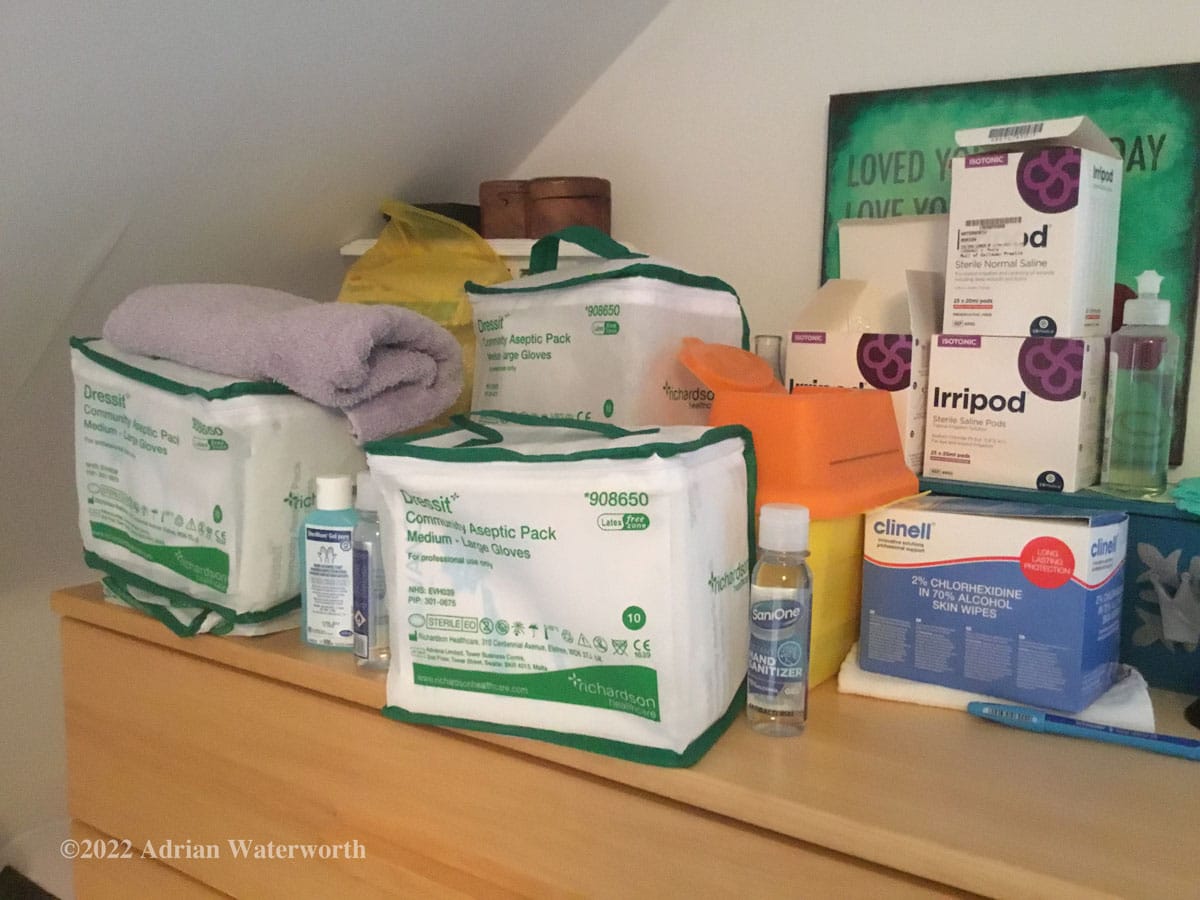
    Those of you who have been following my recent adventures either here or on Facebook will recognise the above photograph as the small mountain of medical supplies that I have had to keep on hand in order to look after my percutaneous cholecystostomy. Or gallbladder drain if you can’t cope with a tongue-twister at this time of day.

    You will also know that the last few weeks have been rather, er, interesting, shall we say?

    A couple of weeks ago, while the wonderful district nurses were changing the dressing over the drain, we discovered that the original stitch that held the tube in place had torn out and the drain had slipped a centimetre or so out from where it was supposed to be. Luckily for me, it was still working so could be assumed still to be in place far enough to continue doing its job. Also, my GP is a dab hand with a needle and thread and managed to put in a new stitch to hold things and all was good again. Well, give or take the pain of being stitched (even with a local anaesthetic) but you can’t make omelettes without breaking a few eggs, etc.

    Anyway…a week later (last Thursday, in fact) I had just had another scheduled dressing change and been back home for an hour or two. While walking around the house, I managed to snag the tube on an item of furniture. I was walking quite quickly and actually dragged the furniture along with me. Of course, as Isaac Newton tells us, every action has an equal and opposite reaction and the weight of the furniture proceeded to drag the tube another couple of centimetres out of my body. The dressing (which included a special gadget to help hold everything in place for just such eventualities as this) did its job as well as it could, but the experience was still painful. Very painful. If you live within a few hundred miles of south-west Scotland and heard a spine-chilling scream carried to you on the wind, it was probably me. Sorry about that.

    At this point, I was fairly sure I had torn the new stitch out of my body. However, the dressing was still holding things in place and the pain began to subside a little. The drain was also still working so I thought I’d just give it a bit of time before getting all panic-stricken about it.

    A wasted journey

    That was fine until Saturday morning when it was still stinging a lot and I thought that there had been a little further outward movement. So a trip to the local A&E unit ensued. After a couple of hours, a doctor and nurse came to take a look. They removed the external dressing pad and then stopped when they got to the drain-holding gadget underneath (a thing called a DrainFix dressing). In order to check out the stitching and the drain site itself, they would need to remove that. Unfortunately (and very surprisingly) they didn’t have any of those in the hospital. Nor did they have any other kind of drain-securing dressing. In the absence of that, the doctor wasn’t prepared to remove the dressing and take a look, since they wouldn’t be able to re-dress it. Which was fair enough but a bit annoying since I actually had a small stock of DrainFix dressings at home that the district nurses used for dressing changes. If I’d known that a hospital – and one with an actual A&E department – wasn’t going to have any, I could have taken one along with me. As it was, I was given the option of either heading for A&E at Dumfries (80 miles away) or just waiting until Monday when I would be seeing the district nurses again and could get my GP to check it out. So I waited it out, being very careful with myself and monitoring the drain tube closely for any further movement.

    On Monday, I went for the usual dressing change and told the nurse what had happened. I’d already forewarned the GP surgery about it, so the doctor (a locum in this case) was ready to take a look. To our surprise, we found that the stitch had actually held but the drain tube had managed to slip through it. The net result was that the drain was now 3 or 4 centimetres further out of my body than it was when it was first put in. While it still seemed to be working, I had been having a few problems with it over the weekend (leaking, not flushing out properly in the mornings, bleeding, etc.) and that amount of movement definitely falls into the “Uh-oh! This is getting rather worrying” category.

    Luckily, I was already scheduled to be at the hospital in Dumfries on Tuesday afternoon for an MRI scan so the doc phoned the hospital and spoke to a duty surgeon about the whole thing. They agreed that it needed to be checked out by a surgeon so it was arranged that I would present myself for surgical assessment on Tuesday morning. It would mean an early start (80 miles away, remember?) but it did at least mean that the whole thing would get checked out properly. So far so good…

    [ Now, tune in to Part 2 for the next boring – er, I mean, thrilling – instalment! ]

  • The Insufferable Persistence of St Bagnes the Bilious

    The Insufferable Persistence of St Bagnes the Bilious

    Yesterday was a day of toweringly high hopes and immense disappointment.

    I had an appointment at the hospital for them to check out the workings of my gallbladder and see whether my percutaneous cholecystostomy (a.k.a. gallbladder drain, a.k.a. St Bagnes the Bilious) could safely be removed. I’ve been stuck with St Bagnes for six weeks now and was fervently hoping that the time might have come for she and I to part company. I had even been in touch with the hospital and – to my immense gratitude – the surgical department had stepped up to the plate and arranged for a doctor to be available to remove the drain if it was going to be possible. (An extra special vote of thanks goes to one of the surgical secretaries/administrators who has been chasing it up for me for the past week and got one of the Registrars on board to sort it out.)

    Ah, such hopes! Such a bright and positive day! Not even spoiled by the lengthy detour we had to take on the way there owing to the main road being closed due to a nasty road accident. When I arrived in the Radiology department, a nice radiologist even came and told me that things had been arranged and, so long as things looked good, I’d be leaving without St Bagnes strapped to my leg. Woohoo!

    Alas, it was not to be. When they went ahead, pumped me full of dye and looked on the X-ray it was obvious that the exit from my gallbladder is completely blocked. Which is a bit weird since, as those of you who have studied Gallbladder 101 will know, the exit and the entrance are one and the same. The gallbladder is, essentially, just a little bag that collects bile from the liver, upgrades it a bit and then pumps it back out again through the same opening it came in through. Think of a little drawstring bag – that’s the kind of thing. And stuff is definitely still getting into my gallbladder somehow. I know that because I have to empty anything from one hundred to two hundred millilitres of ickyness out of the bag every day. But, as far as the normal workings of the gallbladder are concerned, absolutely nothing – zip, zilch, bupkis, nada, diddley-squat – is getting back out again. In the absence of St Bagnes, my gallbladder would be a bit like Hotel California: “You can check out any time you like but you can never leave.”

    The best guess from the doctors and radiologists is that the large gallstone that has lodged itself near the neck of the gallbladder and which hospitalised me back at the end of June is acting like a one-way valve. Some of the bile coming from the liver is managing to flow around it and get into the gallbladder but, when the gallbladder contracts or anything tries to flow back out, the stone moves or gets squashed up a bit and blocks things completely. Bugger!

    Oh, and apparently I also have a lot of gallstones. So many that the radiologist even commented “Oh my God! So many gallstones!” Given that I imagine he’s probably seen a fair few gallbladders and gallstones in his time, I can only assume that my collection is something rather special. Not an award that I particularly wanted to win but there you go.

    Anyway…under the circumstances, St Bagnes has to stay since she is the only thing preventing me from becoming hideously ill again. She might even be a life-saver of sorts. I may also be likely to be stuck with her for a while – probably weeks, maybe even months. I’m waiting to hear from the consultant as to the next steps but, as far as I know, it looks like the only way I’m going to be able to get rid of St Bagnes is when they finally remove my gallbladder altogether. There may also have to be other tests and scans before that to check that there are no other problems further down the bile duct that are going to complicate matters. Depending on how long this all takes, they may also have to get me back in to replace the current drain and fit a new one since these things are supposed to be changed every couple of months if they’re going to be in place for a long time. Bugger, bugger, bugger!!

    So please forgive me if I’m a bit grumpy for a few days. I’ll get over it eventually…

  • Well, that was an adventure…

    Well, that was an adventure…

    In many ways, I have led a blessed or charmed life. I’ve never had to be transported in an ambulance, never been hospitalised (apart from once for a scheduled tonsillectomy when I was about six) and have never had any major medical problems that needed urgent or emergency treatment.

    That all changed a couple of weeks ago when I discovered late one night that I had gallstones. Not only that, but one of the little buggers had decided to block up the neck of my gallbladder, leading to inflammation, infection and all manner of bad things.

    I spent an initial night in A&E before things settled a little and I was sent home. However, the next day it came back with a vengeance and I was back in A&E before being transferred from the local hospital to the main regional hospital about 80 miles away.

    If you’ve ever had a gallbladder problem, you’ll know just how much it hurts. Absolute screaming bloody agony. That pretty much sums up my first five or six days on the ward, connected to a painkiller pump (so I could bang the button for pain relief whenever I needed it) and being filled with all manner of IV antibiotics as if they had a massive batch they needed to use up before their best-before date. Eventually, the pain did largely subside and they could take me off the pump but the infection wasn’t playing ball. One night my body temperature reached 41 Celsius and I was pretty much away with the fairies. It did then come down a little, but blood tests showed that we still weren’t winning. Things were improving slowly, but something clearly had to be done.

    Normally in cases like this, just removing the gallbladder entirely would be the number one surgical option. Unfortunately, two years of pandemic has left the hospital with a huge backlog and the operating theatres are already booked solid. I was ill, but it wasn’t enough of an emergency to clear a theatre slot and get me straight in. Also, given the degree of infection and the fact that any operation would have to have been a fully open procedure (as opposed to keyhole surgery) it was too risky to do it anyway. So I was given a “percutaneous cholecystostomy” instead.

    “A per-who choly-wit-what?” I hear you ask? Yeah, it’s a bit of a medical mouthful but it basically means they have fitted an external drain to my gallbladder to get rid of all the bile, ick and general nastiness that was in there. It’s a little pipe that comes out of my body just below the ribs on my right hand side and is connected to a plastic bag that I have to carry around with me. Like a colostomy, but on a smaller scale and draining the gallbladder rather than my colon.

    I finally came home last Sunday. The drain did the trick and I’ve been improving steadily since it was put in. It’ll remain with me for the next five or six weeks, at which point I’ll go back in for some tests and scans and – hopefully – they’ll be able to remove it. At that point I’ll be put on the waiting list for gallbladder removal surgery but that will be the standard laparoscopic (keyhole) version that is much less risky and easier to recover from. That’s the general plan anyway.

    It’s been an unpleasant time. Throughout all of it, I’m incredibly grateful to the doctors, nurses, ancillary staff, cleaners, porters, radiologists and everyone else who works in the Scottish NHS. I know it’s not perfect and it has its challenges (as does the NHS in England and Wales and Northern Ireland) but I dread to think what the last couple of weeks would have cost if I lived somewhere such as the US. Whatever issues it may have and problems it may face, the NHS is a jewel in this country’s crown and we should all of us fight tooth and nail to stop it being sliced up and sold off to the highest bidder. Healthcare free at the point of need should be an absolute human right and it’s a sad indictment of politicians and their corporate cronies that this isn’t the case all over the world.

    The last couple of weeks have also taught me a few lessons about anxiety and worry. I’ve always been a bit of a worrier (“bit?” – that’s an understatement!) but I think I’m finally beginning to learn that there is only a scant handful of really important things that deserve that kind of attention. All the other stuff I used to worry about is no big deal and shouldn’t be given the time of day. So, for all that it’s been a rough ride, I hope that I’ll be coming out of it feeling much better both physically and mentally. It might take a little while but, after the last couple of weeks, I’m OK with that.