Tag: books

  • The Wigtown Trilogy (unofficial)

    The Wigtown Trilogy (unofficial)

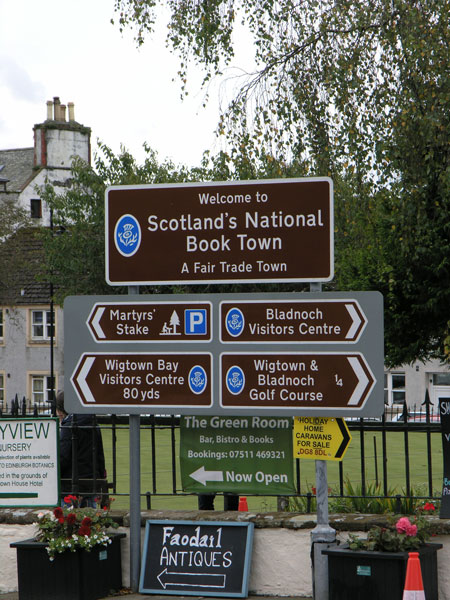
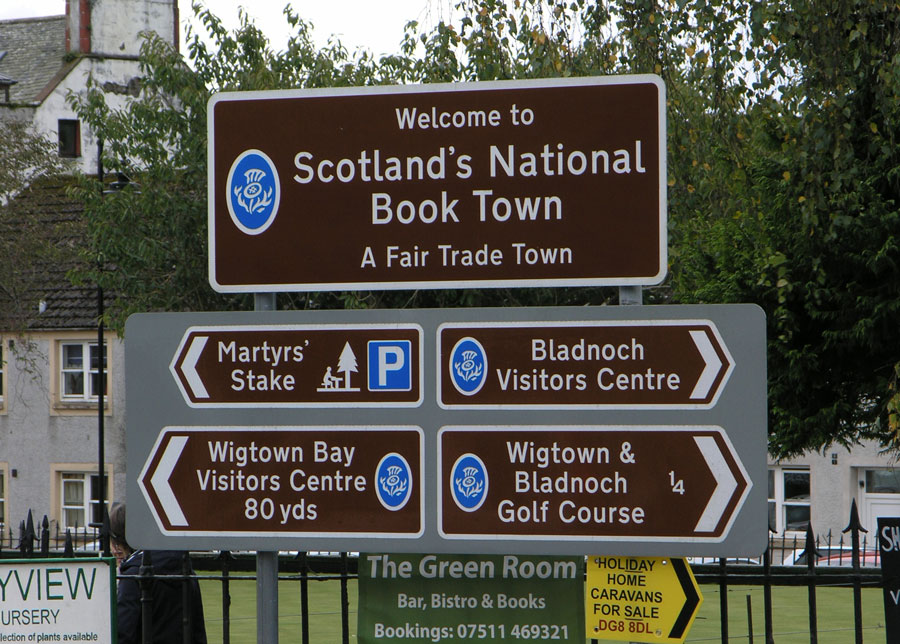
    A while ago, I put a little posting up on here about Wigtown – Scotland’s national book town which is only a mere 30-odd miles or so from my home. I mentioned that it is a wonderful, bookish sort of place and that it has a rather fine book festival each year.

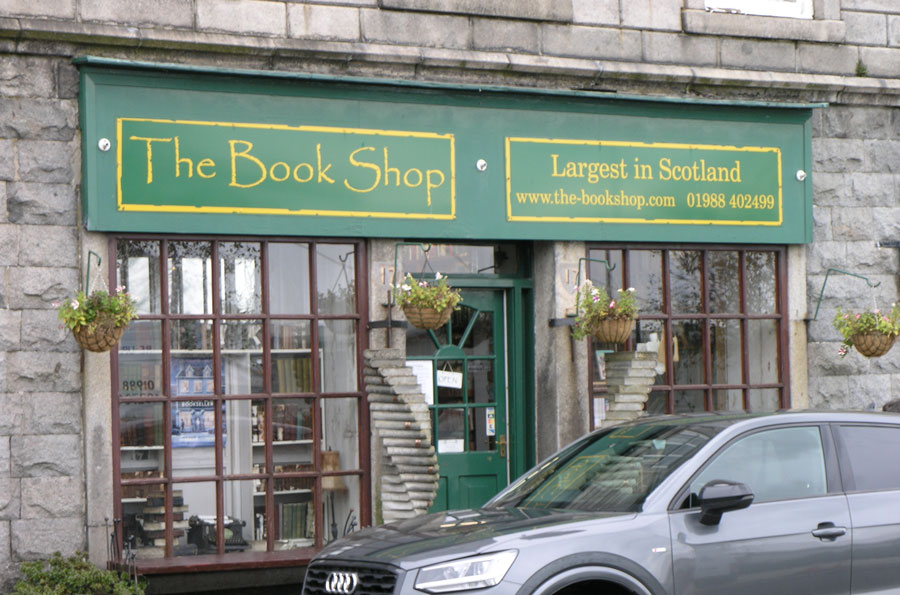
    Although I only touched upon the subject briefly in my previous ramblings, it should also be mentioned that Wigtown, as well as being the home of numerous book sellers and other bookish types, is also inhabited by some rather good authors. Two who are worthy of particular note are Shaun Bythell (proprietor of “The Book Shop”) and Jessica Fox. Between them, they have written a set of three books that, while not a trilogy as such, work rather well if you think of them like that and read them together. All three books are based upon real people and events in Wigtown, they cover some of the same period of time and they are all an easy and entertaining read.
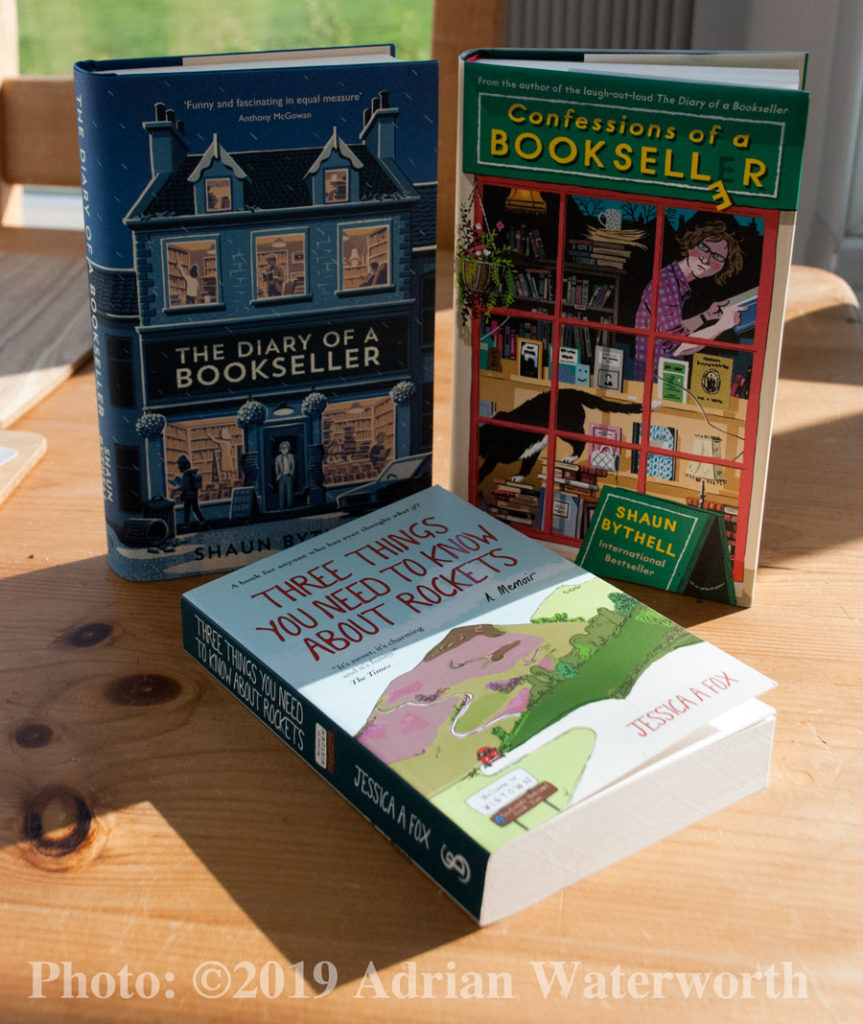
    So, without further ado, I give you today’s recommendations from Adrian’s bookshelves:

    • The Diary of a Bookseller (Shaun Bythell). Written in the form of a diary (of course) covering a period of about a year, I suppose you might call this the first volume of Shaun’s memoirs. Or, at least, his memoirs as they pertain to running a bookshop in our current times. Funny, witty, sometimes a little sad, occasionally heartwarming (he may never forgive me for saying that) and, all in all, a fantastic read for anyone who has the least interest in books and the book trade.
    • Confessions of a Bookseller (Shaun Bythell). The second volume of the bookselling memoirs. Following on from the previous volume and covering another year (or thereabouts) this continues in the same vein, showing the funny, sometimes frustrating, but always delightful side of running a bookshop in a place like Wigtown. (Well, delightful for us readers anyway – some events might be less delightful if you actually had to live through them yourself.)
    • Three Things You Need to Know About Rockets (Jessica A Fox). Not a diary this time, but still autobiographical and covering some of the same time period (and involving some of the same characters) as you will encounter in Shaun’s books. If you’ve ever had the urge to give up on whatever you’re doing and follow a sudden, crazy urge to travel a few thousand miles around the world and do something totally different, you should read this book. Jessica did exactly that when she upped sticks from the west coast of the USA, stopped working for NASA and travelled to the west coast of Scotland to work in a bookshop. In fact, to work in The Book Shop (see above). The day-to-day adventures of adjusting to rural life in south-west Scotland, dealing with the lunatic schedule of the Wigtown Book Festival, learning to drive on the wrong side of the road in an exploding car and a little romance all followed. And other stuff that I won’t mention so that I don’t spoil the book for you, but it’s a thoroughly enjoyable read for anyone.

    Now, in the interests of full disclosure, I should say that – living here and frequenting Wigtown on occasions – I do know both Shaun and Jessica. So it is possible that my enjoyment of all three books was slightly enhanced by my familiarity with some of the people and places involved. However, I’m certain that I would still have enjoyed them even if I’d never seen or heard of Wigtown before in my life. They’re just good books that are well worth a read.
  • Let there be books…

    Let there be books…

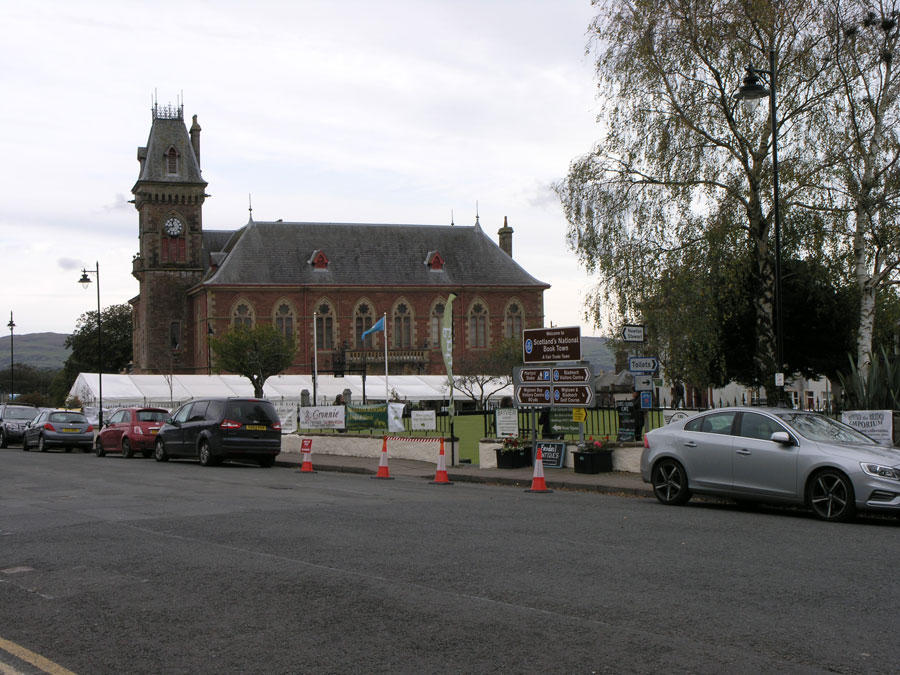
    South-West Scotland has much to recommend it. First off, it’s part of Scotland which is, itself, no bad thing at all. Second, it has some beautiful countryside, both along the coast (of which there is quite a lot) and inland. Third? Well, there are countless other things I could probably list, but if you’re a bookish sort like me, one of the major highlights is Wigtown.

    Situated on the Machars peninsula, around 50 miles west of Dumfries, Wigtown is Scotland’s Book Town. Sort of a Scottish equivalent of Hay-on-Wye, if you will. It has numerous second-hand and antiquarian bookshops, some rather nice bits and bobs of architecture, a long and interesting history and, at this time of year, it becomes a thronging metropolis of authors, publishers, editors, critics and literary bods of every conceivable stripe. For ten days, the Wigtown Book Festival bursts into life and makes the whole town even more bookish than usual (if that is possible). There are talks, tours, workshops, literary pub quizzes, concerts and all manner of entertainments (usually related to books in some fashion, of course). As well as a packed programme of events for adults, there is also a thriving young-adult side to the festival and even stuff for the kiddies. All in all, it’s a wonderful feature of the local calendar and always has something interesting to offer.

    It usually falls over the last weekend of September and first week of October, so this year’s festival began last Friday (27th) and runs until this coming Sunday (6th). If you’re anything like me, you would find it very easy to lose a full ten days of your life to it, attending events all day, every day from breakfast until supper time. You’d also probably find that – even though the various talks and other sessions are very reasonably priced (and, in some cases, completely free) – you’d put quite a dent in your bank account by the end of it all. So, unless you happen to be blessed with a healthy supply of spare time and spare cash, it usually makes sense to do a bit of picking and choosing when it comes to what you want to attend.

    This year, I chose half a dozen sessions to attend and have enjoyed learning more about:

    All of them were interesting, all of them taught me some things I didn’t know and all of them were entertaining. I would recommend any of the above books which are available from all good booksellers (including the half-ton gorilla in the room, Amazon) but I’ve provided links to them on The Book People. This is largely out of respect for Shaun Bythell, proprietor of The Book Shop in Wigtown, now a best-selling author himself, an all round good egg (don’t tell him I said that!) and a man who, as an independent book seller, has a love-hate (well, mainly hate really) relationship with Amazon. (Although I do confess to using Amazon for all sorts of stuff – very useful when living somewhere a bit remote – I wouldn’t even dream of pointing anyone in the direction of Amazon in this particular post!)

    So if you’re a bookish type and are looking for your next literary festival fix, try a jaunt out into the wilds of south-west Scotland. You might be surprised what you find there! You’ve only got a couple of days before it wraps up again for this year, but it’ll be coming around again at the end of next September and I’m prepared to bet there’ll be more good, fun and fascinating stuff to see.


  • The Water Margin

    The Water Margin

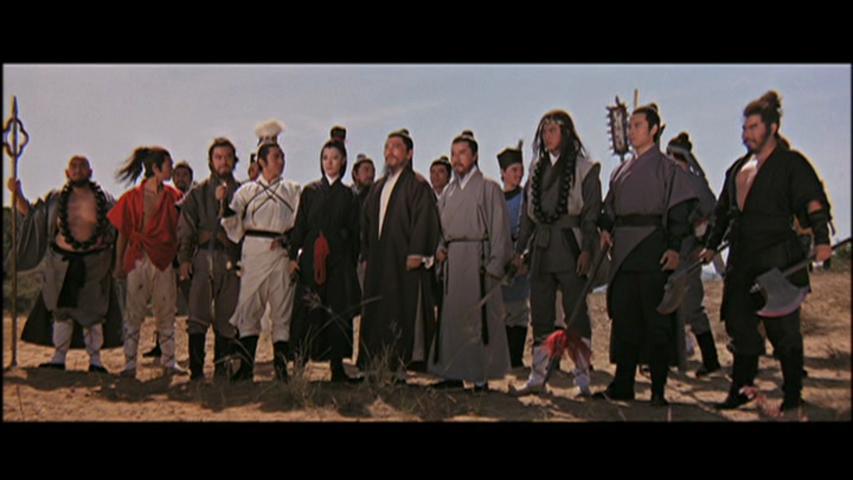
    Those of you of a certain age may remember a TV series shown on the BBC back in the 70s called “The Water Margin”. This was a Japanese production of a Chinese tale about bandits living in the marsh regions around Mount Liang (or Liang Shan Po as it was usually named in the series). It only ran for a couple of seasons, but was rather fun in its way and full of noble warriors engaged in various forms of mediaeval chop-socky, defeating the bad guys and pausing now and again to stare moodily into the distance. Or moodily at one another if the script called for it.

    Although it was made in Japan, it was dubbed into English and featured Burt Kwouk as its occasional narrator. His role largely consisted of providing some background to events, as well as offering up the odd mystical and suitably inscrutable-sounding Oriental proverb. Some of which sounded like they were probably found in a box of fortune cookies, but I digress…

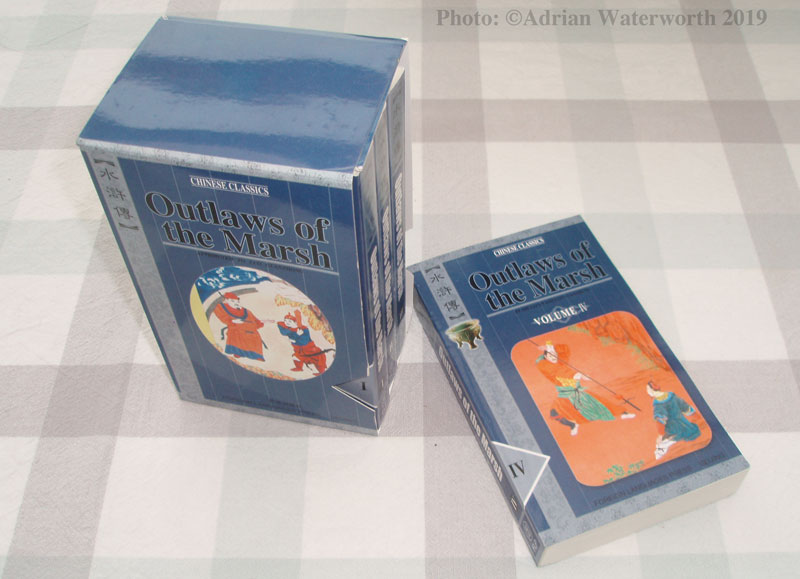
    The important point about The Water Margin – aside from the harmless entertainment that it offered a pre-teen Adrian back in a simpler time – is that it is actually based on one of the great classics of Chinese literature. Also known as The Outlaws of the Marsh, it was written around the 14th Century, but is set a couple of centuries earlier during the Song Dynasty. It tells the story of 108 heroes who, faced with widespread petty corruption and the misdeeds of Government and military officials at various levels, end up as outlaws and ultimately all make their way to the marshy region around Mount Liang. From the great bandit encampment that they establish there, they go on to make life miserable for the corrupt officials and generals and other assorted petty bad guys, while sticking to their principles of not attacking the common people or (as far as possible) making the lot of the common folk any worse that it already was.

    All in all, it’s a bit of a Robin Hood sort of tale – noble men (and women) forced to become outlaws in a time of corrupt officialdom, while trying to stick up for the ordinary folk (mostly) and behave with honour, etc. etc. Of course, there are some notable differences:

    • Whereas even the longest version of the Robin Hood story is still fairly short, the full version of Outlaws of the Marsh is long. Like 100 chapters, over 2000 pages (in the translation I have here), usually published as a four-volume-set sort of long.
    • While the cast of major characters in Robin Hood is pretty small, the cast of characters in Outlaws of the Marsh is huge. Just keeping track of the 108 heroes (the 36 “Heavenly Spirits” and the 72 “Earthly Demons” as they’re known), their origins, inter-relationships, roles and positions within Liangshan Marsh can be tricky enough. Add to that the assorted bad guys, secondary characters and other people who crop up in the story and even the shortest summary of who is who is going to take several pages.
    • Although Robin Hood and his merry men were styled as outlaws, they were largely noble and didn’t actually do too many criminal sort of things or act in a cruel or vicious manner. The heroes of Outlaws of the Marsh, however, aren’t above a bit of straightforward banditry (when called for) and they’re quite prepared to get seriously vindictive, violent and downright nasty when circumstances call for it. Cutting out the occasional heart, sexual assault, the odd bit of cannibalism and beheading people then stringing their innards up on a tree are par for the course in 12th-14th Century China it seems. Even if you’re the good guys.

    There are, of course, similarities too. Just as Robin and his men had Sherwood Forest nicely sewn up and could hide there and harry the Sheriff of Nottingham and his men at will, the Outlaws of the Marsh have a fine stronghold on Mount Liang and can strike out for miles around to bring death and destruction to dodgy officials, evil generals and bad governers alike. Also, just as Robin and his men are ultimately pardoned by King Richard, the Outlaws of the Marsh want nothing more than a pardon and amnesty from the Emperor (which they finally receive in the later part of the story).

    So, bearing these points in mind, what’s it like as a book? Well, sadly I don’t have the know-how to read it in the original Chinese, but the translation by Sidney Shapiro is supposed to be one of the better English texts and, having read it, I have to say that it’s rather good. Don’t get too hung up on trying to remember who everyone is all of the time (as you go on, you’ll get to know the main players anyway) and try to ignore some of the heroes’ more dastardly acts along the way and the whole thing makes for a rollicking good read. Even though it is so long, it is written in a story-teller style, so manages to keep you interested from chapter to chapter most of the time. The writing can get a bit formulaic (for example, the number of chapters that end with something along the lines of “Because of this and that, these other things happened. Want to know how? Read the next chapter”) but, for me, that kind of thing became an entertaining little quirk in its own right, rather than causing any real nuisance.

    Overall, Outlaws of the Marsh makes for an entertaining and enjoyable long read and, if you’re at all interested in classic Chinese literature (or even if you’re not) it’s well worth a look. Just make sure you set enough time aside to work your way through it!

    (And, for bonus points, while the story is largely a work of fiction, some of the characters are based on real people who actually lived during the 12th Century and are recorded in historical works from the Song Dynasty. So that’s a one-up on Robin Hood, whose historical origins are still highly debatable to this day.)