Category: Curated

  • A good photograph…

    A good photograph…

    …is knowing where to stand. Or so Ansel Adams is supposed to have said. And I don’t think I can imagine any more apt turn of phrase to introduce another absolutely brilliant photographer whom I have been fortunate enough to meet since moving to Scotland. Ladies and gentlemen, I give you Mr Phil McMenemy.

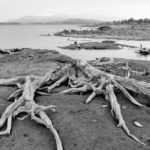
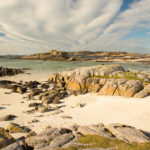
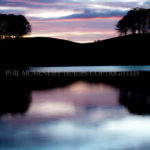
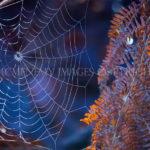
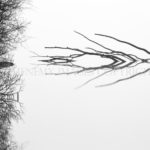
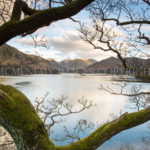
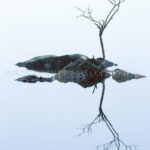
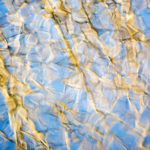
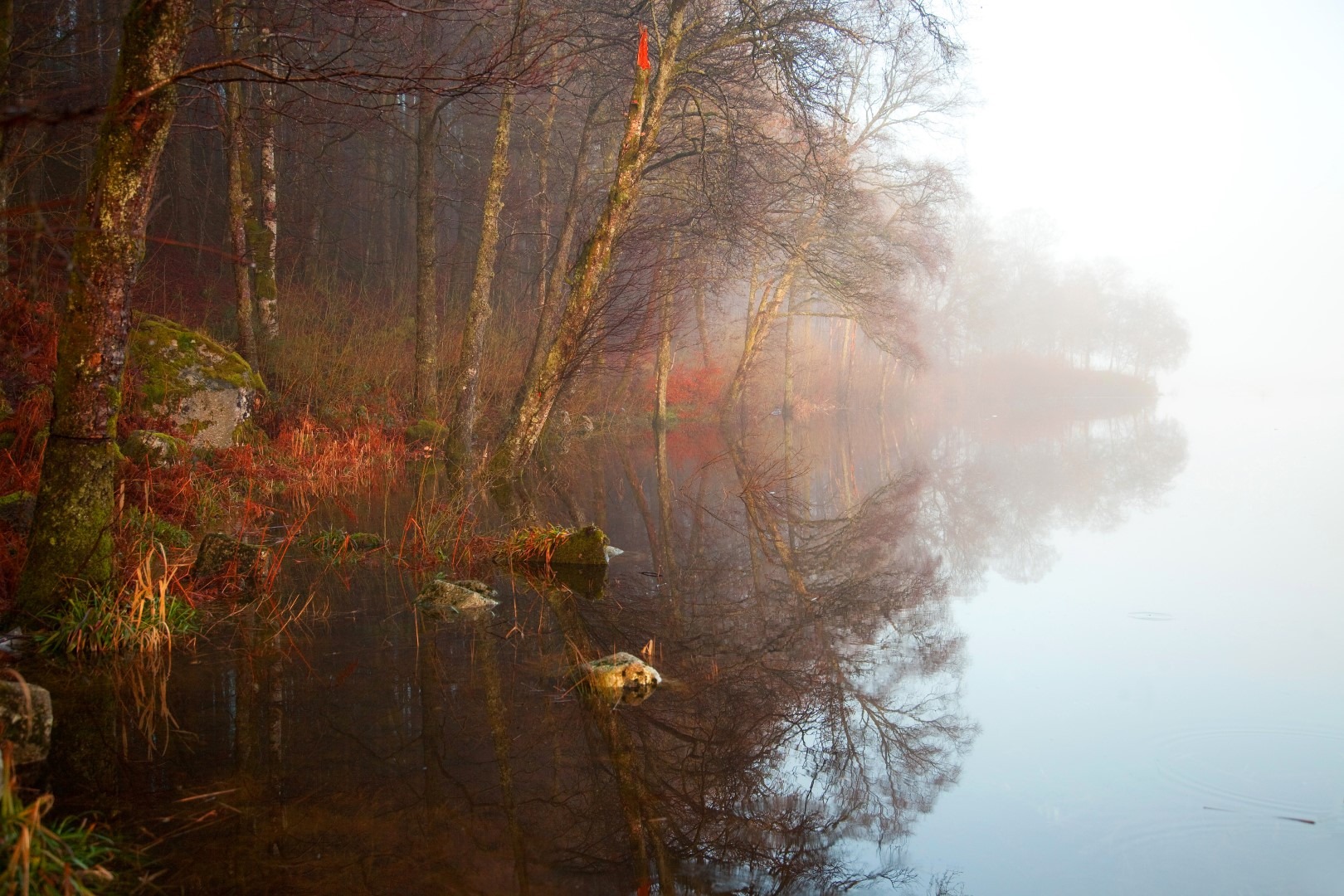
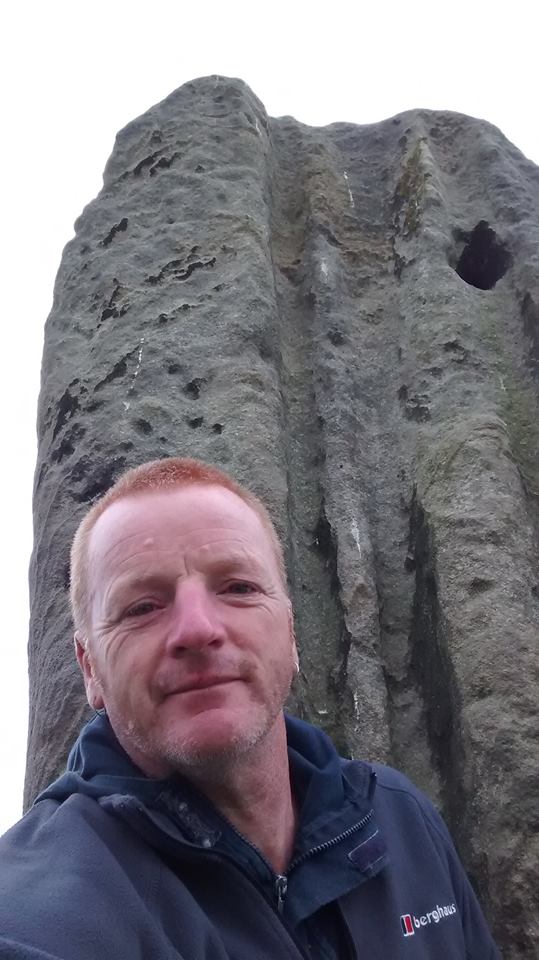
    When not grabbing cheeky selfies in front of enormous stones, Phil works out of his own gallery in the lovely little village of Laurieston, just a few miles north-west of Castle Douglas. He is a fine art landscape photographer, a past winner of the Scottish Nature Photography Award and if there is anyone I would describe as “knowing where to stand” it is this guy. Not only that, but he has the patience (or obsession, call it what you will) to search out the right places to stand, at the right time, to take some of the most beautiful and evocative landscape photographs that I have ever seen. His feel for the landscape and the light is fantastic, while his eye for composition is second to none. But that’s not all. As well as capturing large-scale landscape scenes beautifully, Phil also brings his own creative sensibility to his work, producing images that focus on smaller details, reflections and more abstract views of the world around us. All in all, it’s a winning combination as you can see from examples like these…

    And this is just a randomly selected tip of the creative iceberg when it comes to Phil’s work. If you ever find yourself in the area, do visit his gallery (The Gallery at Laurieston) to see his stunning photographs in real life – I can guaranteee you won’t be disappointed. You’ll also find that he’s a great guy, does a good line in tea/coffee and cakes and the gallery often includes exhibitions of other artists’ work. What’s not to like?

    Alternatively, if you can’t quite stretch to visiting in person at the moment, or you’d just like to know a little more, you can find Phil’s own website at http://www.pmcphotography.co.uk You can also see many more examples of his beautiful work at https://philmcmenemy.smugmug.com while the Gallery at Laurieston also has its own Facebook page to allow you to keep up with the latest news.

  • The Water Margin

    The Water Margin

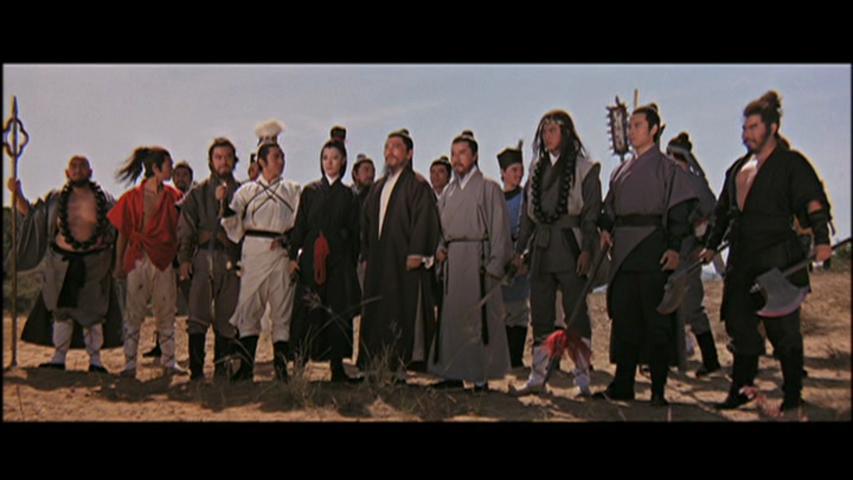
    Those of you of a certain age may remember a TV series shown on the BBC back in the 70s called “The Water Margin”. This was a Japanese production of a Chinese tale about bandits living in the marsh regions around Mount Liang (or Liang Shan Po as it was usually named in the series). It only ran for a couple of seasons, but was rather fun in its way and full of noble warriors engaged in various forms of mediaeval chop-socky, defeating the bad guys and pausing now and again to stare moodily into the distance. Or moodily at one another if the script called for it.

    Although it was made in Japan, it was dubbed into English and featured Burt Kwouk as its occasional narrator. His role largely consisted of providing some background to events, as well as offering up the odd mystical and suitably inscrutable-sounding Oriental proverb. Some of which sounded like they were probably found in a box of fortune cookies, but I digress…

    The important point about The Water Margin – aside from the harmless entertainment that it offered a pre-teen Adrian back in a simpler time – is that it is actually based on one of the great classics of Chinese literature. Also known as The Outlaws of the Marsh, it was written around the 14th Century, but is set a couple of centuries earlier during the Song Dynasty. It tells the story of 108 heroes who, faced with widespread petty corruption and the misdeeds of Government and military officials at various levels, end up as outlaws and ultimately all make their way to the marshy region around Mount Liang. From the great bandit encampment that they establish there, they go on to make life miserable for the corrupt officials and generals and other assorted petty bad guys, while sticking to their principles of not attacking the common people or (as far as possible) making the lot of the common folk any worse that it already was.
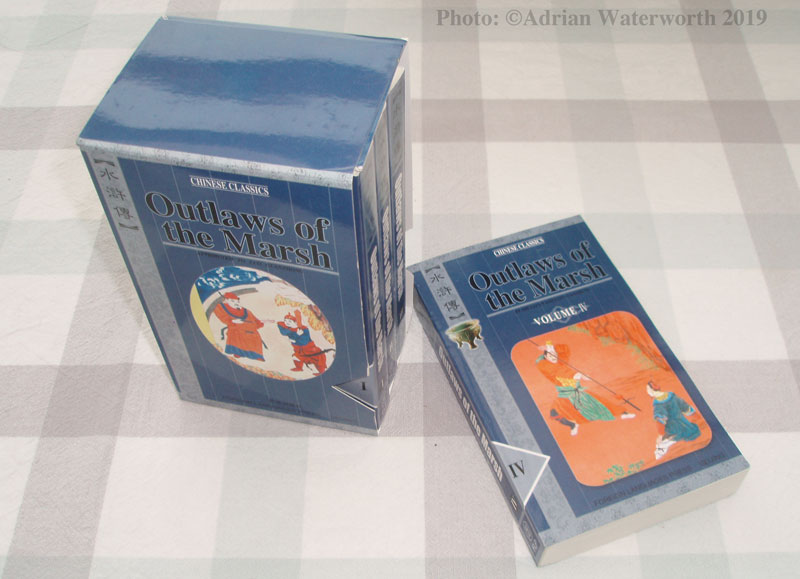
    All in all, it’s a bit of a Robin Hood sort of tale – noble men (and women) forced to become outlaws in a time of corrupt officialdom, while trying to stick up for the ordinary folk (mostly) and behave with honour, etc. etc. Of course, there are some notable differences:

    • Whereas even the longest version of the Robin Hood story is still fairly short, the full version of Outlaws of the Marsh is long. Like 100 chapters, over 2000 pages (in the translation I have here), usually published as a four-volume-set sort of long.
    • While the cast of major characters in Robin Hood is pretty small, the cast of characters in Outlaws of the Marsh is huge. Just keeping track of the 108 heroes (the 36 “Heavenly Spirits” and the 72 “Earthly Demons” as they’re known), their origins, inter-relationships, roles and positions within Liangshan Marsh can be tricky enough. Add to that the assorted bad guys, secondary characters and other people who crop up in the story and even the shortest summary of who is who is going to take several pages.
    • Although Robin Hood and his merry men were styled as outlaws, they were largely noble and didn’t actually do too many criminal sort of things or act in a cruel or vicious manner. The heroes of Outlaws of the Marsh, however, aren’t above a bit of straightforward banditry (when called for) and they’re quite prepared to get seriously vindictive, violent and downright nasty when circumstances call for it. Cutting out the occasional heart, sexual assault, the odd bit of cannibalism and beheading people then stringing their innards up on a tree are par for the course in 12th-14th Century China it seems. Even if you’re the good guys.

    There are, of course, similarities too. Just as Robin and his men had Sherwood Forest nicely sewn up and could hide there and harry the Sheriff of Nottingham and his men at will, the Outlaws of the Marsh have a fine stronghold on Mount Liang and can strike out for miles around to bring death and destruction to dodgy officials, evil generals and bad governers alike. Also, just as Robin and his men are ultimately pardoned by King Richard, the Outlaws of the Marsh want nothing more than a pardon and amnesty from the Emperor (which they finally receive in the later part of the story).

    So, bearing these points in mind, what’s it like as a book? Well, sadly I don’t have the know-how to read it in the original Chinese, but the translation by Sidney Shapiro is supposed to be one of the better English texts and, having read it, I have to say that it’s rather good. Don’t get too hung up on trying to remember who everyone is all of the time (as you go on, you’ll get to know the main players anyway) and try to ignore some of the heroes’ more dastardly acts along the way and the whole thing makes for a rollicking good read. Even though it is so long, it is written in a story-teller style, so manages to keep you interested from chapter to chapter most of the time. The writing can get a bit formulaic (for example, the number of chapters that end with something along the lines of “Because of this and that, these other things happened. Want to know how? Read the next chapter”) but, for me, that kind of thing became an entertaining little quirk in its own right, rather than causing any real nuisance.

    Overall, Outlaws of the Marsh makes for an entertaining and enjoyable long read and, if you’re at all interested in classic Chinese literature (or even if you’re not) it’s well worth a look. Just make sure you set enough time aside to work your way through it!

    (And, for bonus points, while the story is largely a work of fiction, some of the characters are based on real people who actually lived during the 12th Century and are recorded in historical works from the Song Dynasty. So that’s a one-up on Robin Hood, whose historical origins are still highly debatable to this day.)


  • Flash! Bang! Wallop!

    Flash! Bang! Wallop!

    What a picture!

    As some of you may know, I have sometimes been known to strut my stuff as a photographer (of sorts). However, I have never thought of myself as a particularly great photographer. My work is reasonably capable and I’ve been good enough to take a few nice shots in my time, but I seldom reach levels that I would consider as real art. That’s fine by me though and I’m happy enough with what I do.

    Of course, beautiful places like south-west Scotland attract photographers like floodlights attract moths. Most days, you can’t throw a rock around here without braining someone with a camera who is waiting for just the right light to get their next shot. Many of these folks are keen amateurs or tourists visiting the region on holiday, but we also have a healthy crop of professional photographers working in the region. And today, I’d like to introduce you to one of the best – step forward and take a bow Mr Kim Ayres!

    Kim Ayres Photographer

    Some photographers specialise in huge landscapes, while others zoom in on tiny details of nature and the world around us. Some are inspired by the night sky, while others take on the challenge of providing the perfect wedding photograph. Kim probably falls into the general category of being a portrait photographer, but that description hardly does justice to his amazing images. He is more than capable of providing the standard studio portrait, but where his work really shines is in his narrative photography. This is where he calls upon a trusty band of local set designers, make-up artists, hairdressers and other professionals to help him take photographs that elevate simple portraits and publicity shots into vivid, creative works of art. Check these out!

    And these are just a handful of the stunning photographs that Kim has created. What makes his work stand out for me isn’t just his obvious technical ability with the camera, lighting, composition, etc. but his overall vision. He not only captures an image of his subjects, but he captures something of their spirit and what they’re all about. His individual portraits can be intriguing, sometimes telling you something about the character of the person in the photo, at other times hinting at different aspects of who they are or what they do.

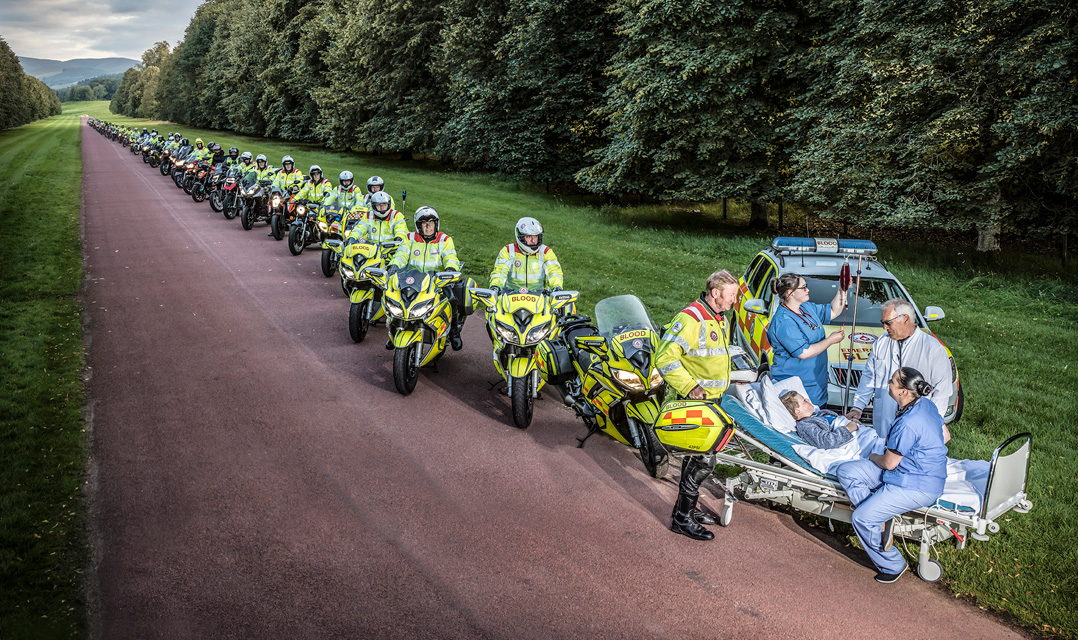
    Similarly, his publicity and promotional photographs for businesses and other organisations go beyond the tired old cliches of “worker talking to customer” or “smiling person handing random item to other smiling person”. For example, when working on a promo shoot for the Dumfries and Galloway Blood Bikes charity, it would have been very easy just to come up with a nice photo of one or two blood bikes, zooming along the road. In fact, that’s probably just the kind of predictable thing I might have suggested, but not Kim. His shoot (featured at the top of this post) involved a huge number of bikes and bikers, medical equipment, actors (patient, nurses, doctor) and, as it turned out, a very tall cherry-picker crane to allow the photograph to be taken at all! And the result speaks for itself – it’s a cracking image that tells you just what the Blood Bikes are all about.

    Is it at all surprising that this man’s photographs can be found adorning glossy magazine covers and winning photography awards?

    Also, leaving aside the actual photography for a moment, I should probably mention that he’s also a really nice guy and good fun to talk to.

    So…if you’re in the market for that extra-special portrait that captures the real you or you know someone who needs some top-notch creative imagery to promote their business or charity, you know who to call:

    https://www.kimayres.co.uk

    Tell him Adrian sent you.


  • Really, Really Heavy Horses

    Really, Really Heavy Horses

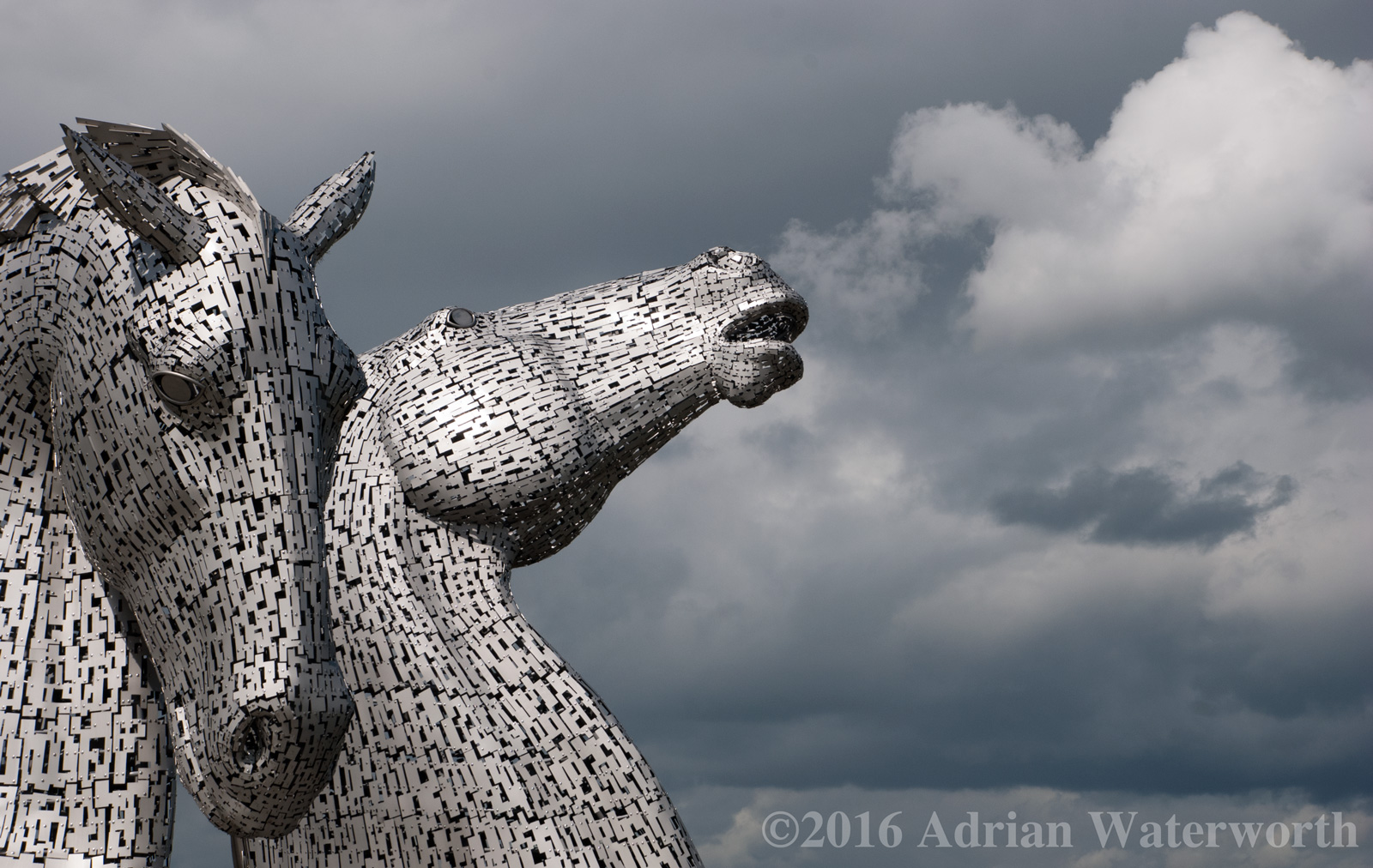
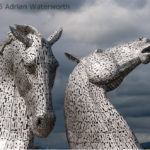
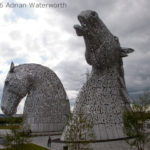
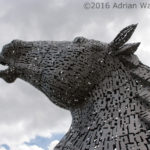
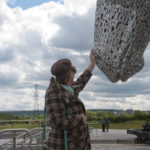
    Anyone who has visited Falkirk has probably seen these guys – the Kelpies. For anyone who isn’t already familiar with them, they are two massive metal statues (the largest equine statues in the world) in the form of the necks and heads of two heavy horses, representing traditional Scottish water spirits. These amazing sculptures, made of stainless steel plates attached to a steel frame, weigh 300 metric tonnes each (that’s 295 old-fashioned UK tons or 331 US tons), stand 30m high (just under 95 feet) and were designed by a chap by the name of Andy Scott.  They are, by any definition, breathtakingly beautiful, grand and amazing.

    After wanting to see these stunning creations for years, I finally managed to visit them a couple of years ago. They stand alongside an extension of the Forth and Clyde canal where a turning circle has been made for boats. A few miles away stands the Falkirk wheel. This is another incredible example of construction in metal, although with more of a focus on functionality as it lifts boats through a height of 24m (around 79ft) to connect the Forth and Clyde canal with the Union canal. But I shall return to that another day. Today is all about the Kelpies…

    Why do I love these things so much? Well, as anyone who has heard me waxing lyrical on the subject of blacksmithing and other forms of metalwork can probably tell you, I just love things that are made of metal.  I also love beautiful, creative things like these. I believe that large works of public sculpture such as this are important cultural artefacts that bring richness and delight to the lives of the people who see them. And, last but not necessarily least, I like horses.  Taking all those things together, the Kelpies are just a winning combination for me.  If you check out Andy Scott’s website, you’ll find that his other works are equally impressive and beautiful and, since quite a few of them are located here in Scotland, I’m planning on seeing more of them as and when I get the chance.  Hats off to him, he’s very talented and his work is awesome!